


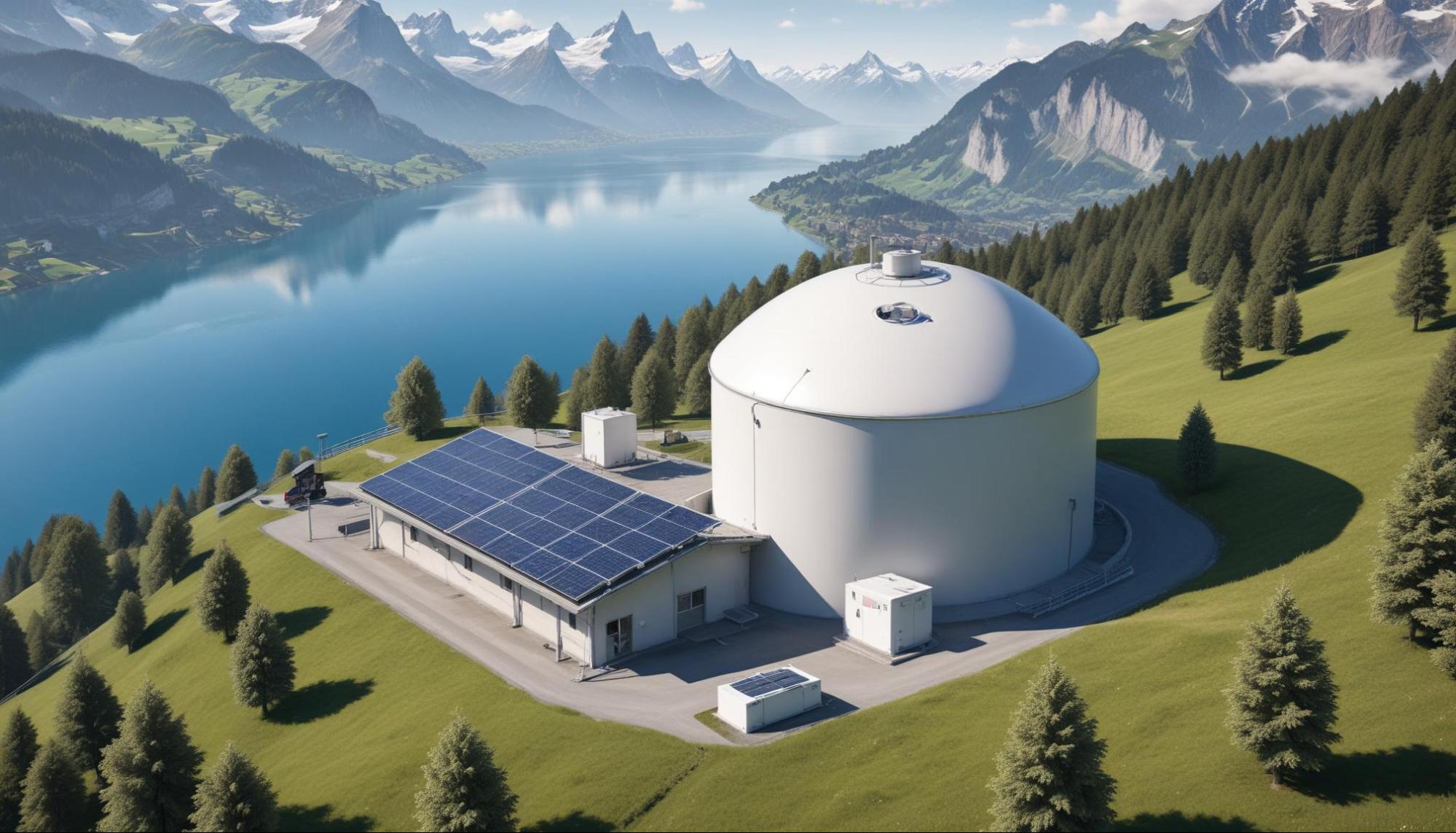
By 2050, Switzerland anticipates a significant expansion of solar photovoltaics (PV) and increased electrification of heating and mobility, coinciding with the aimed phase-out of nuclear power plants. This transition, however, introduces a seasonal imbalance: solar PV generates the most electricity in summer, while power demand peaks in winter, particularly for heating.
Power-to-gas technology offers one possible solution to this imbalance by converting surplus renewable energy into hydrogen or methane. These electricity-based gases (e-gases) can be produced domestically or imported and have two key applications: they can decarbonize hard-to-abate sectors (e.g., industry and heavy-duty transport) or be burned in gas-to-power (i.e., hydrogen or methane-fueled turbines) to generate electricity during winter months.
Our recent study investigates how Switzerland’s integrated energy system could use power-to-gas, gas-to-power, and other flexible resources to balance seasonal mismatches while complying with national energy policies for sustainability and energy security. We explore cost-effective energy system expansion and operation using spatiotemporally resolved models. Our analysis relies on EP2050+ for final power and gas demands.
This study has two main findings. Firstly, power-to-gas can partially absorb excess summer power generation to meet hydrogen and methane needs in Switzerland’s hard-to-abate sectors, especially under restricted energy trades. Secondly, while domestically produced e-gases appear too costly for power generation, imported gases can possibly be cost-effective contributors to winter power supply.
In the remainder of this blog post, we present the seasonal power balance for a reference scenario in 2050. Next, we delve into power-to-gas and gas-to-power operations for variations in Swiss energy trade conditions.
The big picture: Seasonal flexibility needs and providers
In our reference scenario for 2050, we assume a power trade capacity of 10.6 GW (similar to current levels) and e-gas import prices of 120-160 €/MWh (three to four times current fossil gas prices).
Figure 1 shows the contrasting seasonality between power demand and generation from solar PV and run-of-river plants. Our results for the reference scenario indicate that power trades (in gray) play a crucial part in seasonal balancing, while domestic resources, including power-to-gas and gas-to-power, play complementary roles. On the supply side, reservoir hydro mainly contributes to winter power generation, and gas-to-power turbines make a modest contribution to bridging the winter supply gap. On the demand side, technologies such as pumped hydro and power-to-gas absorb cheap electricity generated in the summer. Our findings agree with other research at ETH Zurich, which also highlights the role of power trades and gas-to-power generation in winter power supply.

