


The states of the Nuclear non-Proliferation Treaty (NPT) are meeting at the UN in New York with tensions running high between its nuclear-armed members and with two of them, the US and Russia, involved in illegal wars of aggression against non-nuclear-armed members Iran and Ukraine.
The conference ended its first week having heard accusations and counter accusations of bad faith and provocative, illegal acts between some members, including Iran and the US. There have also been constructive statements from members, particularly those who are also parties to the UN Treaty on the Prohibition of Nuclear Weapons (TPNW) calling for concrete action on disarmament and for members that support deterrence doctrine to abandon it given it undermines the NPT’s purpose.
NPT under strain
When the five original nuclear-armed states joined the NPT, they committed to pursue nuclear disarmament in good faith as stipulated in the treaty’s Article VI, but decades on they have all failed to do so. In fact, following a reduction in arsenals by the US, Russia, France and the UK following the end of the Cold War, those countries, plus China, are all modernising their arsenals and are either expanding them or have plans to do so, which is the opposite of what they should be doing under the treaty.
Senior politicians in some countries that committed to be non-nuclear-armed states and not to encourage proliferation when they joined, mainly NATO members in Europe, have been discussing accepting nuclear “protection” from France and even developing their own nuclear weapons, something that has also been openly discussed in South Korea. This is on top of concerns about Iran’s enrichment of nuclear materials beyond what is needed for civilian purposes and Saudi Arabia’s threat to develop nuclear weapons if Iran does.
ICAN’s statement to conference
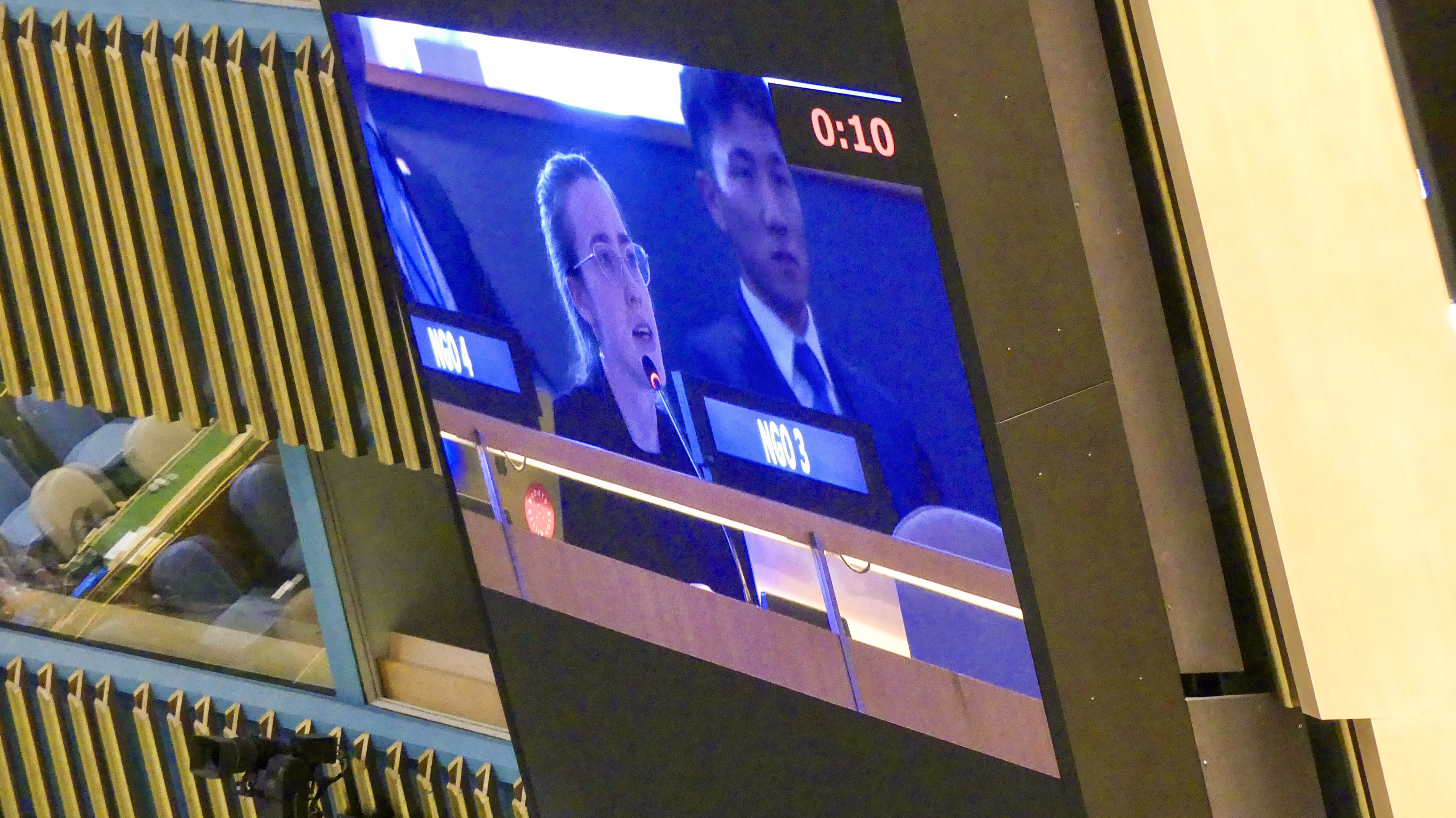
Today, civil society organisations, including ICAN, have addressed the conference. Alicia Sanders-Zakre, ICAN’s Head of Policy, told the delegates: “The states in this room that are serious about this treaty should recognise where they stand. The NPT’s disarmament pillar is failing because a small number of states have decided that their national policies matter more than their legal obligations and more than the security of humanity at large. The majority of this treaty’s membership has never accepted that conclusion.”
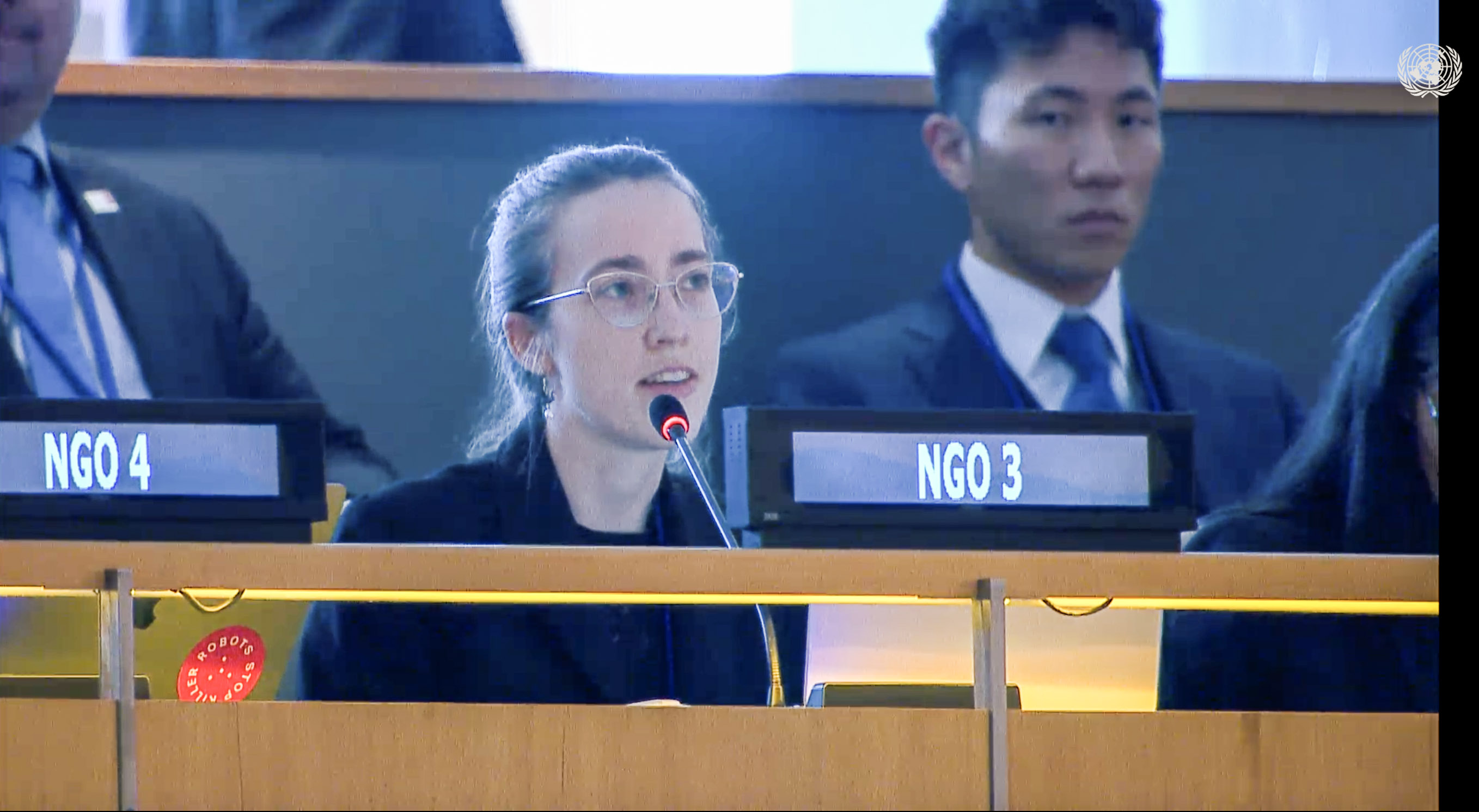
Photo: Mathew Bolton
Ms Sanders-Zakre also said that the TPNW, which a majority of NPT members have also either signed or ratified, is a way to realise the NPT’s disarmament objective: “The TPNW complements the NPT. It is what Article VI looks like when you take it seriously. For the states in this room that are committed to honouring this treaty’s central bargain, and who are watching that bargain be hollowed out, review cycle by review cycle, the TPNW is the available complementary tool to deliver on one of the NPTs most central promises.”
Little prospect of agreement
There has been no agreed outcome at the previous two Review Conferences in 2022 and 2015. In 2022, Russia blocked agreement over attempts to insert criticism into the final document of its invasion of Ukraine during which it took control of the Zaporizhzhia nuclear power plant. In 2015, disagreement over the proposal for a Middle East zone free of weapons of mass destruction prevented members for reaching a consensus.
Given the tensions and divisions already on show this week, it seems unlikely there can be an agreed outcome at this conference and many experts believe this will weaken even further an already rocky NPT treaty regime.
Watch Alicia Sanders-Zakre’s statement
The alternative to deadlock
At the opening of the conference, ICAN published the Cornerstone Report, that documents how the treaty is being systematically undermined by the nuclear weapons states and some of their closest allies, and what can be done to implement the NPTs promise on non-proliferation and disarmament.
The report argues that while a minority of states halts and, as of late, actually reverses progress to implement the NPT, a large majority of states negotiated the TPNW. This treaty came into force in 2021, has a majority of NPT member states on board, and has built in five years what the NPT’s disarmament pillar has not produced in over half a century. This November, it holds its first Review Conference in New York. All states, and especially those serious about honouring the NPT’s original promise, should participate.
Florian Eblenkamp explains the NPT
Download The Cornerstone Report

